

33 % India's Women Reservation Bill Explained :
33 % India's Women Reservation Bill Explained :
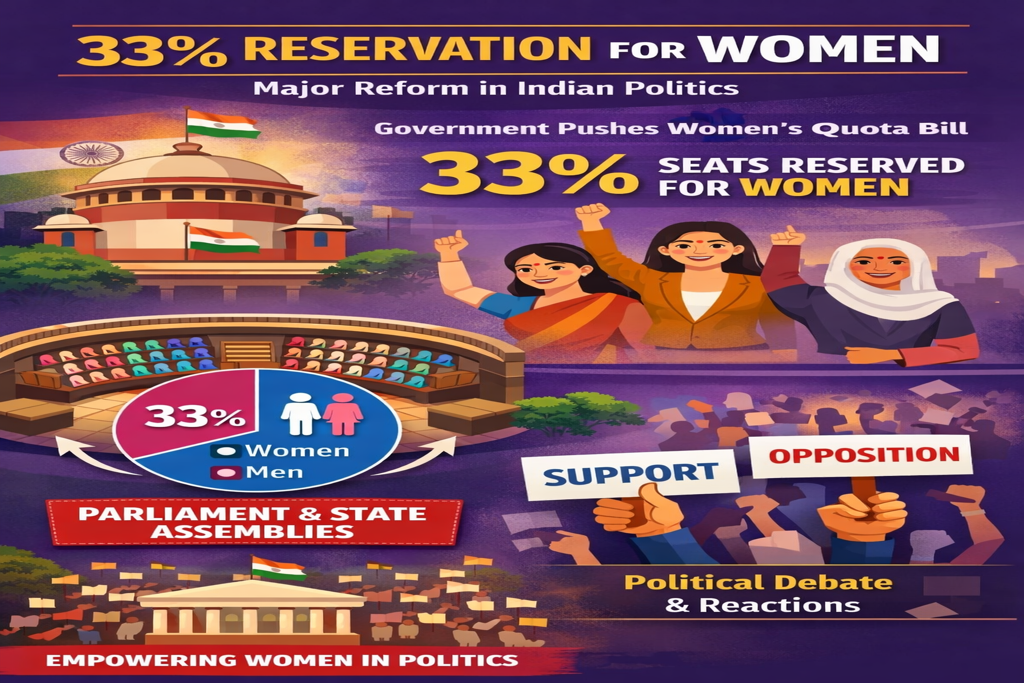
From a pledge remitted in 1996 to an indigenous correction in 2023 and a fresh legislative drive in 2026, India's trip to reserve one-third of administrative seats for women has been marked by major agreement and contentious detainments.
April 16, 2026 · Analysis & Rearmost Developments.
33 seats are reserved for women in Lok Sabha & state assemblies.
15 Women MPs in 17th Lok Sabha —pre-reservation
850 Proposed expanded Lok Sabha strength post-delimitation
What's the women's reservation bill?
The Women's Reservation Bill, officially called the Nari Shakti Vandan Adhiniyam, seeks to reserve one- third of all seats in the Lok Sabha, state legislative assemblies, and the Delhi Assembly simply for women campaigners. The reservation also applies within the being share for slated gentries and slated lines, icing representation for the most marginalized women. It was passed in September 2023 as the Constitution( 106th Correction) Act, but its perpetration was tied to a unborn tale and delimitation exercise. India's Parliament approved the corner legislation nearly unanimously — the Rajya Sabha suggested 214 – 0 in its favor after an 11- hour debate — marking a major moment in Indian republic. The bill will remain in force for 15 times, with Parliament retaining the option to extend it later.
" Achieving a critical mass of 30 representation by women in Parliament is known to yield positive issues for women's commission." — UN Women A 30- Time Journey The Timeline
1946 The Constituent Assembly convenes. Only one woman — Sarojini Naidu is present in the initial session. The question of a women's share is batted and remitted, with a vague" gentleman's agreement" to address it latterly.
The 1993 73rd and 74th emendations reserve one- third of seats for women in panchayats and cosmopolises setting a grassroots precedent.
1996 – 2003 The 81st indigenous Correction Bill, seeking 33 reservation, is introduced in 1996 but setbacks. analogous bills lapse again in 1998, 1999, and 2003 due to Lok Sabha dissolutions and lack of agreement.
2008 The UPA government introduces the bill in the Rajya Sabha, where it passes. But it setbacks again with the dissolution of the 15th Lok Sabha.
Sept 2023 The NDA government introduces the Nari Shakti Vandan Adhiniyam in the first session of the new Parliament structure. Both houses pass it in two days — Lok Sabha( 20 Sep) and Rajya Sabha( 21 Sep). President Droupadi Murmu gives assent on 28 September 2023.
April 2026 A special 3- day Parliament session( April 16 – 18) is convened to consider the Constitution( 131st Correction) Bill 2026, the Delimitation Bill 2026, and the Union homes Laws( Amendment) Bill 2026 together designed to gormandize- track perpetration before the 2029 Lok Sabha choices, using 2011 Census data.
Why is perpetration delayed?
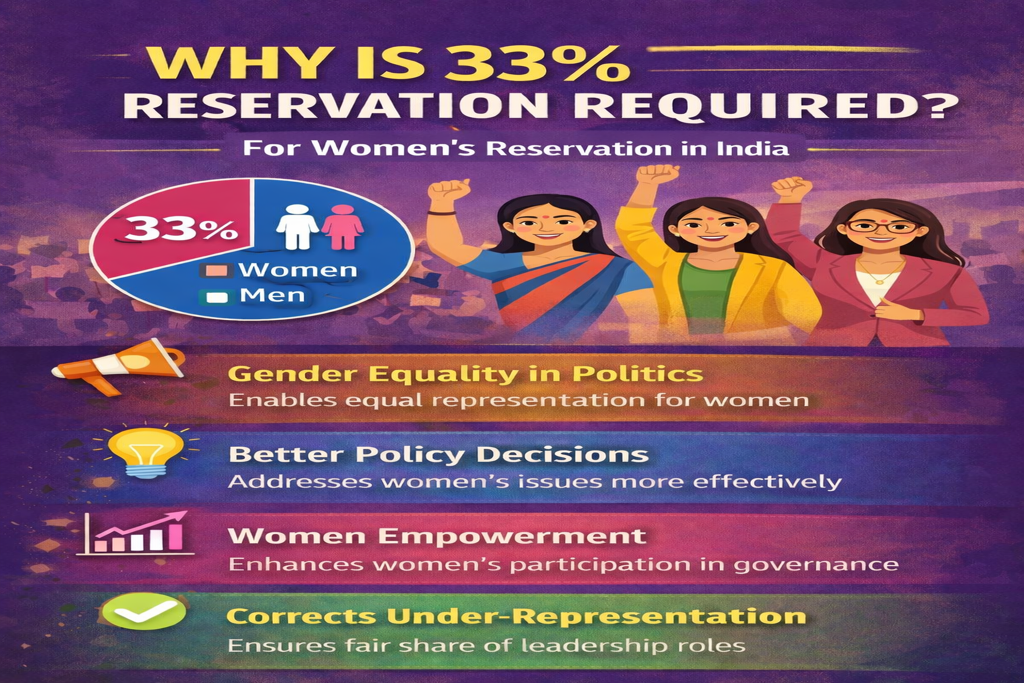
Despite passing in 2023, the Women's Reservation Act can not come into force until after a new tale is published and a fresh delimitation exercise is completed. The 2021 Census, delayed by COVID- 19, remains deficient as of 2026. The government has now introduced fresh legislation to conduct delimitation grounded on the rearmost published Census( the 2011 Census), bypassing the delay for the 2031 Census and enabling perpetration by the 2029 choices.
The 2026 legislative package also proposes expanding the Lok Sabha from 545 to as numerous as 850 seats and sets up a new Delimitation Commission chaired by a Supreme Court judge with powers original to those of a civil court — to redraw constituency boundaries and assign women- reserved seats.